
Commissioning quality is shaped well before an industrial valve reaches site. Valve installation and commissioning depends on decisions made early: confirming specifications, actuator interfaces, installation responsibilities and acceptance criteria. When hand-offs between procurement, installation, testing and operations are unclear, gaps can affect start-up and valve performance.
That’s why project teams need more than a checklist at the point of installation. What should a complete scope include, and how can you assess whether a technical provider can deliver it? Start by defining responsibilities, planning verification and agreeing on records before work begins.
This guide explains how to plan, install, test and hand over industrial valves, including checks and documentation that support acceptance. It also covers how to confirm applicable project requirements with the responsible engineering authority and compare providers by their scope, evidence and fit for the job.
Key Takeaways
- Separate physical installation from commissioning and operational acceptance so responsibilities and approval points are clear.
- Use a readiness sequence to confirm valve data, site access, isolation requirements and work planning before equipment arrives.
- Follow approved procedures for valve installation and commissioning, with verification points matched to project requirements.
- Compare support scopes by who is responsible for inspections, testing, witness arrangements and handover records.
- Match specialist planning or inspection support to project complexity, internal capability and operational risk.
Valve installation and commissioning: what each stage covers
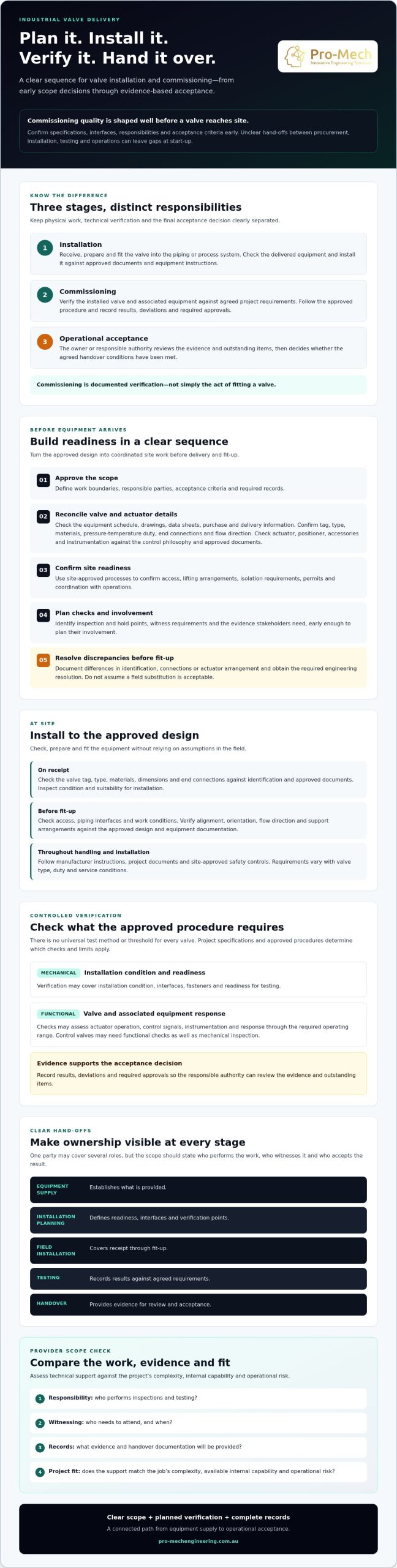
Valve installation covers receiving, preparing and fitting equipment into a piping or process system. Commissioning follows, verifying that the installed valve and associated equipment perform in line with approved project requirements. Operational acceptance is the owner’s or responsible authority’s decision that the evidence and outstanding items meet the agreed handover conditions.
The work varies with valve type, duty and service conditions, including the process medium, operating range and connection arrangement. A control valve, for example, serves as a process’s final control element, so its actuator, controls and instrumentation may need functional checks as well as mechanical inspection. Project specifications and equipment instructions determine which checks apply. In severe service environments, specifying appropriate valve technology — such as ValvTechnologies metal seated valves for high-pressure or abrasive applications — can significantly affect installation planning and long-term performance.
Assign responsibilities across the full sequence. Equipment supply establishes what is provided; installation planning defines readiness, interfaces and verification points; field installation covers receipt through fit-up; testing records results; and handover provides evidence for review. One party may cover several roles, but the scope should state who performs the work, who witnesses it and who accepts the result.
Commissioning is the documented verification of an installed valve and its associated equipment against agreed project requirements.
What is included in valve installation?
Installation readiness starts with checking delivered equipment against its identification and approved documents. Confirm the valve tag, type, materials, dimensions and end connections, then check its condition and suitability for installation. Handle and store the equipment in accordance with its instructions and project requirements.
Before fit-up, check that access, piping interfaces and work conditions are suitable. Verify alignment, orientation, flow direction and support arrangements against the approved design and equipment documentation. There is no universal method for every valve or installation: manufacturer instructions and project documents govern equipment-specific requirements. Resolve discrepancies before proceeding instead of relying on assumptions in the field.
What does valve commissioning verify?
Commissioning checks whether the installed assembly meets its approved acceptance criteria. Mechanical verification may cover installation condition, interfaces, fasteners and readiness for testing. Functional verification may assess actuator operation, control signals, instrumentation and the valve’s response through the required operating range. The approved procedure determines which checks apply.
Test methods and limits must come from the applicable specification and approved procedure, not an assumed industry-wide threshold. Record results, deviations and required approvals so the responsible authority can review the evidence. This connects equipment supply, installation, testing and operational acceptance while making each responsibility and decision point clear.
Plan valve installation before equipment arrives on site
Effective valve installation and commissioning planning turns the approved design into coordinated site work. Before delivery, establish who owns each interface, what evidence is required and which decisions must be resolved before installation. Engineering, procurement, construction, operations and any specialist provider should work from the same approved scope and current documents.
Confirm valve, actuator and documentation details
Reconcile the equipment schedule, drawings and data sheets with the purchase and delivery information. Check the valve tag, type, materials, pressure-temperature duty and end connections, as well as the specified flow direction. Confirm that the actuator, positioner, accessories and instrumentation align with the control philosophy and approved documentation.
Raise discrepancies for engineering review before fit-up. Differences in connection type, actuator arrangement or identification can affect installation planning and verification. Don’t assume a field substitution is acceptable. Document the issue and obtain the required resolution through the project process.
Establish site readiness and safe work controls
Use the site-approved process to confirm access, lifting arrangements, isolation requirements, permits and coordination with operations. Identify inspection and hold points, along with any witness requirements, early enough for stakeholders to plan their involvement. Safety controls must follow approved site procedures and project risk assessments, not generic assumptions.
A practical readiness sequence is:
- Approve the scope: define work boundaries, responsible parties, acceptance criteria and required records.
- Reconcile equipment and documents: match valve and actuator details to approved drawings, data sheets and schedules.
- Plan receipt and storage: assign delivery checks, identification, handling and storage arrangements in line with project and equipment instructions.
- Confirm site access and interfaces: coordinate access, lifting, piping readiness and operations requirements.
- Authorise the work plan: confirm isolation, permits, procedures, inspection points and witness arrangements through the relevant site process.
This sequence can expose mismatches before they become site delays or unresolved acceptance issues. For example, checking end connections and flow direction against approved documents before delivery gives the project team time to resolve discrepancies through engineering rather than during fit-up.
Keep responsibilities explicit across procurement, engineering, construction and operations. Procurement can confirm what was ordered and delivered; engineering resolves technical deviations; construction coordinates field execution; and operations confirms relevant site interfaces and acceptance requirements. If specialist support is included, define its deliverables and limits in the scope instead of assuming responsibility transfers automatically.
For projects requiring structured planning or documented verification, discuss valve project planning with Pro-Mech and confirm the precise scope and deliverables before work is assigned.
Install and commission valves with controlled verification
Use a field checklist to make each verification point visible, but treat the approved work pack, equipment instructions and project procedures as the authority for execution. The checks below are prompts, not a substitute for requirements set by the responsible engineering authority. Record results as work proceeds and resolve discrepancies before they carry through to commissioning.
Installation checks that protect valve integrity
- Inspect before fitting: Confirm the valve’s identity and configuration against approved documents. Examine its condition and record damage, missing items or other discrepancies for review.
- Verify the installation position: Check flow direction, orientation, alignment and piping connections against the manufacturer’s instructions and approved drawings. Don’t force a fit or alter the arrangement without an authorised resolution.
- Control the interface: Confirm supports and connected equipment suit the specified arrangement. Apply cleanliness and foreign-material controls where required by the project, equipment instructions or approved procedure.
- Record inspection points: Capture required checks, hold points, witness activities and deviations in the project’s designated records.
Controlled fit-up means following the approved sequence and checking interfaces as work progresses, not relying on a final visual check alone. If the actual piping arrangement, valve orientation or equipment configuration differs from approved documents, pause the affected work and refer the issue through the project’s engineering process.
Commissioning checks for actuated and control valves
Before functional testing, verify the actuator configuration and supply connections against approved documentation. Confirm that travel limits, fail action and associated position indication match the specified arrangement. Check control signals and valve response using the approved procedure, including the control system and relevant instrumentation where the scope requires them.
Functional verification should reflect the valve’s duty and control philosophy. A valve intended to respond to a control signal, for example, needs checks that demonstrate the specified signal path and response, not just evidence that the actuator moves. The procedure must define applicable acceptance criteria and test conditions. Don’t assume test values or use generic limits where project documents have not established them.
- Record the equipment identification and procedure used.
- Enter observed results against the applicable acceptance criteria.
- Document exceptions, corrective actions and any required retests.
- Obtain the reviews or witness sign-offs specified by the project.
Traceable test evidence gives the responsible team a sound basis for operational handover. This is central to valve installation and commissioning: link results to the correct valve, review them against agreed requirements and retain them with the project records.
Compare valve commissioning scopes, tests and handover evidence
A commissioning label alone doesn’t show what a provider will deliver. Compare the written scope, assigned responsibilities and evidence required for acceptance. The examples below are planning categories, not standard packages. Confirm exactly which activities and deliverables are included before appointing a provider.
| Scope type | Typical boundary to clarify | Evidence to agree |
|---|---|---|
| Planning-only | Preparation of an installation or commissioning plan. Confirm whether site activities, inspections and testing are excluded. | Approved sequence, prerequisites, assigned responsibilities, inspection points and acceptance criteria. |
| Installation support | Defined support during field work, such as specified inspections or quality checks. Confirm who performs installation and who resolves technical deviations. | Inspection records, discrepancy reports and any required witness or review sign-offs. |
| Broader commissioning scope | Agreed functional checks and test coordination for the valve and relevant actuators, controls or instrumentation. Confirm test execution, system interfaces and acceptance authority. | Test results, applicable calibration evidence, approved configuration details and documented exceptions. |
These boundaries matter: a provider engaged to prepare a plan isn’t automatically responsible for field execution or acceptance. For valve installation and commissioning, tests and limits should reflect the valve duty, approved specifications and project requirements. Confirm applicable requirements with the responsible engineering authority rather than relying on generic test assumptions.
How to assess a commissioning plan
Check that the plan sets out a logical sequence, prerequisites, responsible parties and acceptance criteria. Inspection and witness points should align with project quality requirements and stakeholder expectations, with enough notice for required reviewers. Ask how document revisions, deviations and unresolved issues will be recorded, assessed and closed, and who has authority to approve a change.
Which records should support handover?
Agree on the handover index before testing begins. Depending on the scope, records may include inspection reports, test results, applicable instrument calibration evidence and approved configuration data. Each item should be traceable to the valve tag and relevant equipment records, drawings or project documents.
Make outstanding actions, approved deviations and operational limitations visible to the receiving team. A complete package should let reviewers identify what was checked, against which criteria, by whom and with what outcome. Confirm the exact records and responsibilities in the contract or work scope. Don’t assume they are included.
For a project-specific discussion about planning, inspections or commissioning support, review Pro-Mech valve project support and confirm the proposed scope and deliverables.
Choose valve installation and commissioning support for your project
The right support model depends on project complexity, internal capability and the consequences of an installation or acceptance issue. A straightforward replacement in a familiar system may suit a capable in-house team working to approved procedures. A project with multiple valve interfaces, actuators or control-system dependencies may benefit from defined specialist planning, inspection or commissioning input. Neither model removes the need for clear accountability.
Assess the work, not just the service label. Identify where your team has the required time and technical capability, where independent checks would add value, and which activities must remain under the responsible engineering authority’s control. Then define the support boundary so internal and external roles complement rather than duplicate one another.
Questions to ask a technical service provider
Ask for a project-specific scope that names responsibilities and deliverables. In particular, clarify:
- Who prepares the plan and coordinates site interfaces?
- Who performs or reviews inspections, tests and witness points, and who makes acceptance decisions?
- What records will be supplied, and how will changes, non-conformances and incomplete acceptance items be managed?
- What relevant personnel capability and heavy-industry project experience can be demonstrated for this valve duty and site context?
Where available, request examples of comparable scopes or clearly described deliverables to support claims of relevant experience. For projects spanning Australia, assess how the provider will coordinate with the site team and project stakeholders across the required locations. Pro-Mech supports heavy-industry valve projects nationally. Confirm project-specific suitability, personnel and scope directly rather than assuming every capability applies to every job.
When Pro-Mech support may fit the project
Pro-Mech may be worth considering where a project needs installation and commissioning plans or in-situ quality inspections. Its other service categories include project management, safety procedures, quality audits and witness testing. These may suit a team needing structured verification or defined inspection involvement, while retaining clear acceptance authority and site controls.
Before selecting any provider, align the proposed work with your project’s complexity, internal resources and operational risk. Confirm the precise scope, suitability and deliverables with Pro-Mech, including interfaces with your engineering, construction and operations teams.
To discuss the requirements and potential scope for your project, discuss your valve installation and commissioning requirements with Pro-Mech.
Set your project up for a controlled handover
Reliable valve installation and commissioning starts with clear scope boundaries, approved requirements and coordinated responsibilities. Before work begins, confirm that valve and actuator details match project documents, and that site readiness, inspection points and acceptance criteria are understood by everyone involved.
During execution, use approved procedures to guide installation and functional checks. Keep results traceable to the relevant equipment, document exceptions and make unresolved items visible before operational handover. When assessing support, look beyond the service label: agree who plans, inspects, tests and provides each required record.
Pro-Mech offers installation and commissioning plans, with project management, safety procedure planning, quality audits, witness testing and in-situ quality inspections among its service categories. The right scope depends on your project, so confirm specific deliverables and responsibilities before engagement.
Discuss your valve installation and commissioning requirements with Pro-Mech to consider how its support may fit your project. Clear planning and documented verification help your team work towards a controlled handover.
Frequently Asked Questions
What is the difference between valve installation and commissioning?
Installation is the physical receipt, preparation and fitting of a valve into its piping or process system. Commissioning is the subsequent verification that the installed valve and associated equipment meet approved project requirements. Operational acceptance is a separate decision by the owner or responsible authority, based on review of the agreed evidence and any outstanding items. The project scope should identify who performs each stage and who has authority to accept the results.
What checks are included in valve commissioning?
Valve commissioning checks depend on the equipment, duty and approved procedure. They may include confirming identification and installation condition, checking mechanical interfaces, and verifying actuator, control and instrumentation operation where applicable. Required pressure or leak tests must be specified in project documents rather than assumed. Record each result against the relevant valve and acceptance criteria, with deviations or corrective actions documented for review by the responsible project authority.
How long does valve commissioning take?
There is no fixed duration for valve commissioning. The time required depends on factors such as valve type, actuator and control-system interfaces, test requirements, site access, prerequisites and the availability of required reviewers or witnesses. A defined scope and approved procedure help the project team estimate the work and coordinate dependencies. Ask the responsible provider to identify assumptions, required inputs and potential hold points in its project-specific schedule rather than relying on a generic duration.
Can a valve be commissioned before the whole plant is operational?
Yes, some checks may be completed before the full plant is operational if the approved procedure, site conditions and available utilities or test arrangements allow them. This may include inspection or defined functional checks on an isolated system. Other verification may depend on connected controls or operating conditions. The project team should separate checks that can be completed early from those requiring integrated operation, and confirm the permitted sequence with the responsible engineering authority.
Who is responsible for valve commissioning on an industrial project?
Responsibility is established by the project contract, scope and approved procedures, rather than by a universal assignment. The asset owner or responsible engineering authority typically defines requirements and acceptance arrangements, while contractors or specialist providers may plan, perform, inspect or document specified activities. The project should name the party accountable for each task, witness point, technical decision and final review. Clear interface definitions help prevent gaps between procurement, construction, commissioning and operations.
What documentation should be provided after valve commissioning?
The handover package should contain the records required by the project scope and acceptance process. These may include valve identification and configuration details, inspection reports, test results, applicable instrument calibration evidence, approved deviations and required approvals. Records should be traceable to the valve tag and relevant project documents. Include outstanding actions or operating limitations so the receiving team can understand the status. Confirm the required document list and review responsibilities before commissioning starts.
How do you commission an actuated control valve?
Commission an actuated control valve using its approved procedure and project acceptance criteria. Verify the actuator configuration and supply connections against approved documents, then check travel limits, fail action and position indication. Test control signals and valve response through the specified control-system interface where included in scope. Record results, exceptions and corrective actions against the valve identification. Test limits and sequence must come from project requirements and equipment instructions, not assumed universal values. For applications in high-pressure or abrasive service, understanding the performance characteristics of ValvTechnologies metal seated valves engineered for severe service conditions can inform specification and commissioning requirements.