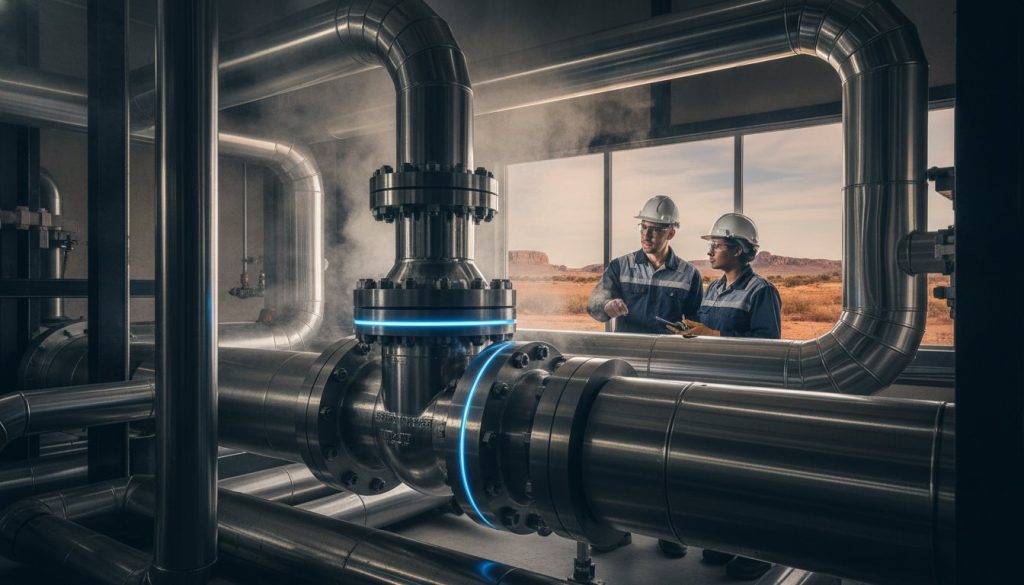
If your high-pressure steam system relies on standard isolation, you aren’t just managing a process; you’re managing an inevitable failure point. In severe service environments, the specification of ValvTechnologies metal seated valves often marks the difference between continuous operation and costly, unplanned downtime. Australian engineers operating in abrasive slurry or high-temperature sectors understand that traditional sealing methods frequently fail to meet the rigorous demands of modern safety and operational integrity standards.
This technical reference provides an exhaustive evaluation of how these zero-leakage solutions deliver absolute isolation in the most challenging conditions. By focusing on the integration of proprietary HVOF RiTech coatings and adherence to ASME B16.34-2023 and ISO 15848-1, we offer a roadmap for extending the mean time between maintenance (MTBM) while ensuring compliance with the latest Australian workplace exposure limits. We’ll examine the technical validation of these systems, the impact of the July 2026 Valmet acquisition on global support, and the specialised engineering oversight required for successful installation and commissioning in national heavy industry projects.
Key Takeaways
- Understand the technical distinction of the zero-leakage standard to mitigate operational risk and prevent seat leakage in severe service isolation.
- Evaluate the performance of ValvTechnologies metal seated valves featuring proprietary HVOF RiTech coatings for resistance against extreme temperatures and abrasive slurries.
- Identify critical application points in power generation and minerals processing where high-spec hardware prevents seat erosion and unplanned outages.
- Determine precise selection criteria by aligning process media characteristics with specialised actuation requirements and Australian engineering standards.
- Utilise comprehensive installation and commissioning plans to ensure long-term mechanical integrity and adherence to national safety protocols.
Defining the ValvTechnologies Advantage: The Zero-Leakage Standard
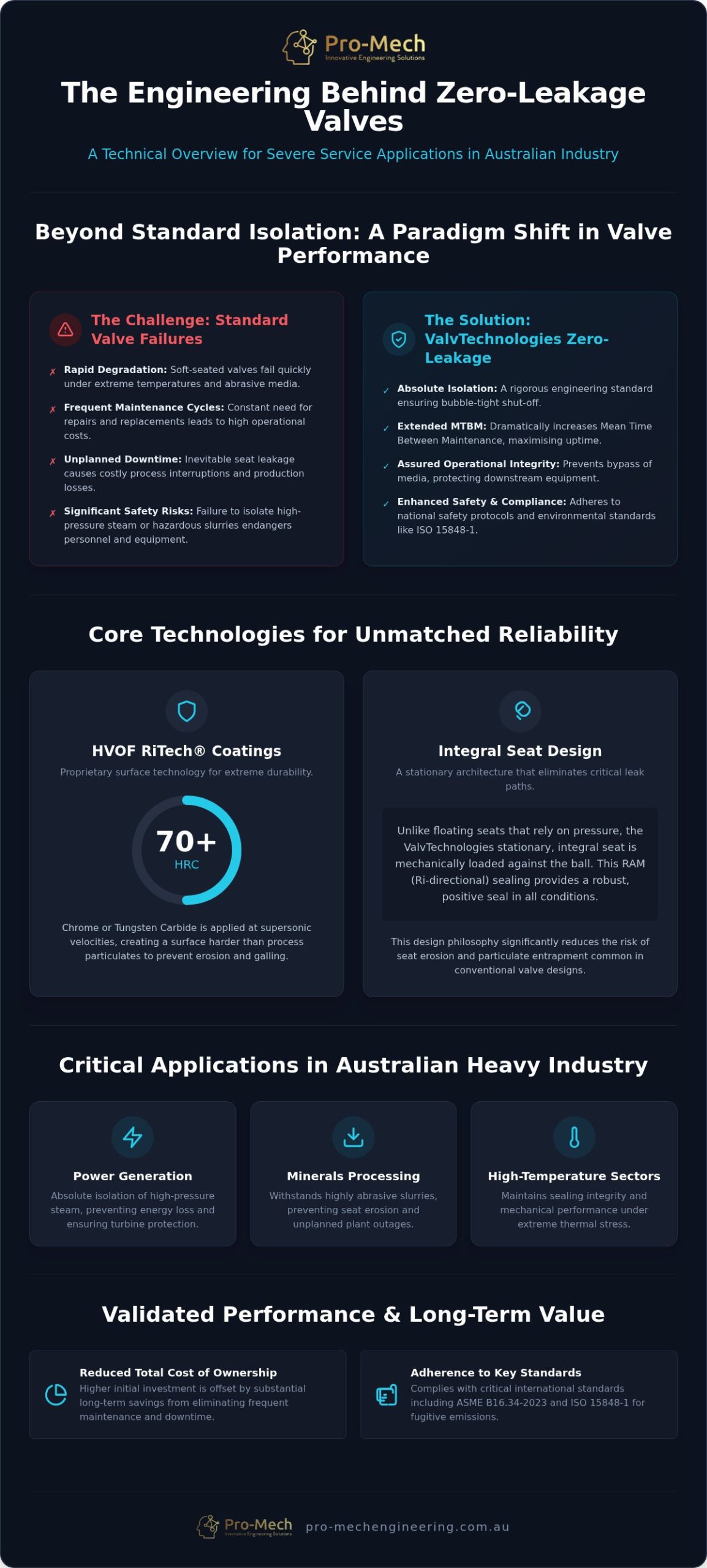
Severe service applications in Australian heavy industry demand isolation solutions that transcend standard expectations. Traditional soft-seated valves often degrade rapidly under extreme thermal stress or abrasive media, leading to frequent maintenance cycles. ValvTechnologies metal seated valves were engineered specifically to address these failure modes. Since the company’s inception in 1987, the primary focus has remained on achieving a “zero-leakage” standard. This isn’t merely a marketing claim; it’s a rigorous engineering benchmark that defines the absolute isolation of process media in high-pressure environments.
The Integral Seat Design Philosophy
The core technical differentiator lies in the integral seat design. Unlike floating seat alternatives that rely on springs or downstream pressure to create a seal, ValvTechnologies utilises a stationary, integral seat. This architecture eliminates the leak paths typically found behind the seat ring in conventional designs. The RAM (Ri-directional) sealing mechanism ensures that the ball is mechanically loaded against the seat, providing a robust barrier even in low-pressure scenarios. To understand the fundamental ball valve design and operation, one must recognise that moving from a floating to an integral seat significantly reduces the risk of seat erosion and particulate entrapment.
Absolute Zero-Leakage Performance Standards
In high-stakes environments, “low leakage” is an unacceptable risk. ValvTechnologies defines zero-leakage as a bubble-tight shut-off, validated through stringent testing protocols. These valves comply with international standards such as ASME B16.34-2023 and ISO 15848-1:2015, which are critical for managing fugitive emissions and maintaining operational integrity. For Australian operators, this level of performance directly impacts plant safety and environmental compliance. By preventing the bypass of high-pressure steam or hazardous slurries, these valves protect downstream equipment and site personnel.
Reducing the Total Cost of Ownership (TCO) is a primary objective for technical procurement professionals. While the initial capital expenditure for high-specification hardware may be higher, the long-term savings are substantial. ValvTechnologies solutions extend the mean time between maintenance (MTBM) and virtually eliminate the costs associated with unplanned outages and frequent seat replacements. This steady, reliable performance positions them as the “specialist’s specialist” choice for complex infrastructure projects where reliability isn’t optional.
Technical Specifications of Severe Service Ball Valves
The operational reliability of ValvTechnologies metal seated valves is rooted in advanced material science and precision mechanical engineering. While standard isolation valves often rely on basic hardened alloys, severe service environments require a more sophisticated approach to surface protection. High-velocity oxygen fuel (HVOF) technology serves as the foundation for this durability, allowing these valves to withstand the destructive forces of high-pressure steam and abrasive mining slurries that would typically cause rapid seat degradation.
HVOF Coatings and Surface Hardness
The application of proprietary RiTech® HVOF coatings is a critical differentiator in valve longevity. During this process, Chrome Carbide or Tungsten Carbide materials are applied at supersonic velocities, creating a dense, high-integrity bond with the base metal. This results in surface hardness levels exceeding 70 HRC. Such extreme hardness is essential for preventing the erosion and galling often seen in high-cycle applications. By creating a surface that is harder than the particulates found in the process media, the valve maintains its sealing integrity over thousands of cycles. This technical superiority is particularly evident when comparing these coatings to standard hard-facing methods, which often lack the density required to resist fine-particle impingement in Australian minerals processing plants.
V Series Design Features
The V Series architecture is engineered to manage the mechanical stresses associated with extreme pressure and temperature fluctuations. These valves are available in standard, full, and customised bore configurations to suit specific flow requirements and minimise pressure drop. To address environmental and safety concerns, the stem seal technology is designed for rigorous fugitive emission control, complying with ISO 15848-1:2015. A key component of this system is the live-loaded gland, which utilises Belleville springs to maintain constant packing pressure. This design ensures a maintenance-free operation by compensating for packing wear and thermal contraction. For engineers seeking to integrate these high-spec components into broader systems, Pro-Mech provides specialised actuated packages that are factory-tested for immediate deployment.
Thermal expansion is another critical factor in severe service engineering. ValvTechnologies utilises materials with matched coefficients of expansion for the ball and seat, ensuring the sealing mechanism remains functional as temperatures climb toward the upper limits defined by ASME B16.34-2023. This meticulous attention to mechanical stress prevents the “locking” or seat damage that occurs when disparate materials expand at different rates. The combination of hard-facing and thermal management ensures that the valve remains an effective engineered barrier, even when subjected to rapid thermal cycling in power generation boiler feed systems.
Critical Applications Across Australian Heavy Industry
Australian heavy industry operates within a landscape of extreme operational stressors and stringent regulatory requirements. The deployment of ValvTechnologies metal seated valves across power generation, mining, and oil and gas sectors provides a critical safeguard against process failure and environmental excursions. As Australia transitions to legally enforceable Workplace Exposure Limits (WEL) for airborne contaminants in December 2026, the necessity for absolute isolation and superior fugitive emission control has become a primary engineering priority for site managers and safety officers.
Severe Service in Power Station Operations
Power stations face the dual challenge of intense thermal cycling and high-velocity steam impingement. In boiler feed systems and steam drum isolation, standard valves often suffer from wire-drawing, where high-pressure steam carves leak paths across the sealing surfaces. ValvTechnologies metal seated valves mitigate this risk through their integral seat design, ensuring a bubble-tight shut-off that protects downstream turbines from damage. This level of isolation directly correlates to improved heat rate and overall plant efficiency. By preventing the loss of high-energy steam, operators can maintain precise control over thermal cycles and reduce the carbon intensity of power production while adhering to the primary standard for in-service inspection of pressure equipment, AS/NZS 3788:2006.
Erosion Resistance in Mining Slurry Systems
The Australian mining sector, particularly in magnetite and beneficiation plants, requires hardware capable of handling highly abrasive slurries. These environments involve fine particulates moving at high velocities, which can decimate traditional valve seats in a matter of weeks. The application of RiTech coatings ensures that the valve surfaces remain harder than the media they control, significantly extending the mean time between maintenance (MTBM). In remote Australian mining operations, where logistics and specialized labour costs are high, the reliability of ValvTechnologies hardware is a strategic asset. Reducing the frequency of valve replacements in HPAL autoclave processes or tailings management systems allows for more predictable production schedules and lower total cost of ownership.
The oil, gas, and petrochemical industries face similar challenges with reactive media and high-temperature refining processes. Upstream production often involves sand-laden fluids and corrosive gases that demand the rigorous fire-testing standards of API 607 8th Edition. Downstream refining requires valves that can manage the mechanical stress of constant cycling in catalyst handling and coker units. By specifying an engineered barrier that meets these global standards, Australian operators ensure compliance with industrial manslaughter laws now in effect across most states, including New South Wales and South Australia, where legal accountability for workplace safety has reached unprecedented levels of gravity.
Selection Criteria: Engineering the Right Valve Solution
Selecting ValvTechnologies metal seated valves requires a systematic assessment of specific process variables to ensure long-term mechanical integrity. It isn’t a generic procurement exercise but a rigorous engineering requirement. Professionals must evaluate maximum operating pressures and thermal limits alongside the specific chemical and abrasive characteristics of the media. High cycle frequencies place unique demands on seat selection, as the repetitive friction between the ball and integral seat necessitates precise material matching to prevent galling. Adherence to Australian engineering standards, including AS/NZS 3788:2006 for pressure equipment, ensures that the chosen hardware meets the legal safety requirements of national industrial sites.
Actuated Valve Packages for Process Automation
Precision in automation is essential for maintaining the zero-leakage standard in severe service. Integrating ValvTechnologies hardware with high-performance actuators requires exact torque calculations to ensure the sealing mechanism operates correctly under full differential pressure. If an actuator is undersized, the valve may fail to achieve a bubble-tight shut-off or, conversely, cause unnecessary mechanical stress on the stem and packing. Pro-Mech provides specialised engineering oversight to develop actuated packages that include pneumatic, electric, or hydraulic options tailored to the specific fail-safe requirements of the plant. These systems often incorporate custom software interfaces for real-time performance monitoring, allowing for predictive maintenance based on actual valve performance data rather than arbitrary schedules.
Total Cost of Ownership vs. Initial Capital Expenditure
The financial justification for high-specification valves shifts when analysing the Total Cost of Ownership (TCO). While the initial capital expenditure for a metal seated solution is higher than soft-seated alternatives, the reduction in maintenance intervals and spare parts requirements provides a rapid return on investment. In Australian heavy industry, the cost of a single unplanned shutdown can exceed the initial price of the valve hardware by several orders of magnitude. By extending the mean time between maintenance (MTBM), ValvTechnologies solutions protect the critical path of the process. This investment is particularly vital in remote sites where logistics for replacement parts and specialised labour are complex and expensive. Choosing an engineered barrier over a commodity valve is a strategic decision to prioritise operational stability and safety compliance.
Process conditions often fluctuate, and the valve must be resilient enough to handle these transients. Whether managing the rapid thermal expansion of high-pressure steam or the impingement of high-velocity magnetite slurry, the selection process must account for the worst-case scenario. Systematic planning and technical validation at the procurement stage prevent the cascading failures that lead to environmental excursions and regulatory scrutiny. This steady, detail-oriented approach to hardware selection is what defines engineering excellence in severe service isolation.
Strategic Procurement and Commissioning via Pro-Mech Engineering
Procuring high-specification hardware for critical infrastructure requires more than a simple transaction. As an authorised technical procurement partner, Pro-Mech Engineering Solutions provides the engineering oversight and technical validation necessary for the successful deployment of ValvTechnologies metal seated valves. Our approach integrates hardware supply with meticulous project management, ensuring that every component meets the rigorous demands of Australian heavy industry. This systematic execution is vital for national projects where the cost of failure is high and operational integrity is non-negotiable.
Installation and Commissioning Protocols
The transition from procurement to operation is managed through detailed Installation & Commissioning Plans. These protocols are designed to ensure that the mechanical integrity of the valve is preserved during site integration. Correct alignment and orientation are fundamental; even minor deviations can compromise the zero-leakage performance standard that defines the ValvTechnologies advantage. Our engineers oversee witness testing and provide the technical deliverables required for a seamless site handover. This process includes comprehensive safety procedure planning, specifically tailored for high-risk industrial environments where managing high-pressure steam or abrasive media requires disciplined execution.
Ongoing Engineering Support and Quality Audits
Operational success doesn’t end at commissioning. We provide ongoing engineering support through In-situ Quality Inspections and regular engineering audits. These inspections allow for the real-time monitoring of valve health, identifying wear patterns or performance drifts before they lead to unplanned downtime. By utilising our specialised knowledge of flow control systems, we help operators optimise their processes for maximum efficiency. This “specialist’s specialist” approach ensures that equipment supply is backed by a steady, knowledgeable hand. Partnering with Pro-Mech for national support allows sites to maintain compliance with Australian engineering standards while extending the mean time between maintenance (MTBM) for their critical valve assets.
Our commitment to technical integrity is reflected in our software development capabilities, which complement our hardware offerings. These tools assist in the systematic tracking of valve performance and maintenance history, providing a data-driven foundation for quality control. By combining high-specification hardware with comprehensive support services, we ensure that ValvTechnologies solutions remain a reliable engineered barrier against operational risk.
Optimising Severe Service Performance with Technical Integrity
Achieving absolute isolation in severe service environments requires a transition from standard hardware to precision-engineered solutions. The adoption of ValvTechnologies metal seated valves provides a definitive barrier against seat erosion and fugitive emissions, ensuring that high-pressure systems operate with maximum efficiency. By prioritising the integral seat design and proprietary HVOF coatings discussed throughout this reference, Australian engineers can significantly extend their mean time between maintenance while reducing the total cost of ownership. You don’t have to manage these complex procurement cycles alone.
Operational success ultimately depends on the quality of technical oversight and adherence to rigorous standards. As an authorised technical procurement partner, Pro-Mech Engineering Solutions delivers the expertise in AS/NZS compliance and national engineering support required for complex infrastructure. From the development of comprehensive commissioning plans to in-situ quality inspections, we provide the steady, knowledgeable hand needed to manage high-stakes industrial environments. We’re ready to assist with your technical validation requirements.
Consult with a Pro-Mech Engineer on ValvTechnologies Solutions to ensure your next project benefits from the highest standards of mechanical integrity and technical validation. We look forward to supporting your long-term operational success.
Frequently Asked Questions
What makes ValvTechnologies valves “zero-leakage” compared to other metal seated valves?
ValvTechnologies metal seated valves achieve a zero-leakage standard through a stationary, integral seat design coupled with proprietary HVOF coatings. Conventional metal seated valves often utilise floating seats which rely on springs or downstream pressure to create a seal, often leaving leak paths behind the seat ring. The integral architecture removes these paths, ensuring a bubble-tight shut-off that meets the rigorous demands of severe service isolation in high-pressure Australian industrial environments.
Can ValvTechnologies metal seated valves handle high-temperature steam applications?
These valves are specifically engineered to manage high-temperature steam in power generation and refining sectors. By adhering to ASME B16.34-2023 standards, the design accounts for the mechanical stress and thermal expansion inherent in steam drum isolation and boiler feed systems. The use of materials with matched coefficients of expansion prevents the ball and seat from locking, maintaining absolute isolation even during rapid thermal cycling in critical power station operations and industrial facilities.
How do HVOF coatings improve the lifespan of valves in abrasive mining slurries?
HVOF coatings, such as RiTech®, create a dense, high-integrity bond that results in surface hardness levels exceeding 70 HRC. In Australian mining operations, this extreme hardness ensures that the sealing surfaces are significantly more resilient than the abrasive particulates found in magnetite or beneficiation slurries. By resisting fine-particle impingement and erosion, these coatings extend the valve lifespan and reduce the frequency of unplanned maintenance in remote minerals processing plants across the nation.
What industries in Australia typically specify ValvTechnologies hardware?
Heavy industry sectors across Australia, including power generation, mining, oil and gas, and chemical processing, frequently specify this hardware. These sectors require robust isolation for abrasive slurries, high-pressure steam, and reactive chemicals. With the transition to legally enforceable Workplace Exposure Limits (WEL) on 1 December 2026, many Australian operators now prioritise ValvTechnologies metal seated valves to ensure superior fugitive emission control and meet stringent national safety and environmental compliance protocols.
Does Pro-Mech Engineering provide installation and commissioning for ValvTechnologies valves?
Pro-Mech Engineering Solutions provides comprehensive installation and commissioning services as part of its technical procurement partnership. This includes the development of detailed plans to ensure correct alignment and orientation, which are critical for maintaining zero-leakage performance. Our engineers also conduct witness testing and provide technical deliverables for site handover, ensuring that all safety procedures and project management requirements are met for high-risk national infrastructure projects across the country.
Are ValvTechnologies valves available as part of a fully actuated package?
Yes, we supply fully integrated, high-specification actuated packages tailored to specific site requirements. These packages include pneumatic, electric, or hydraulic actuators that are factory-tested with the valve hardware. Our engineering team performs precise torque calculations to ensure the actuator effectively manages the mechanical load of the metal seated configuration under full differential pressure, providing a reliable, automated solution for complex flow control and fail-safe process systems within national projects.
What are the maintenance requirements for a zero-leakage metal seated ball valve?
Maintenance requirements are significantly reduced compared to traditional valves, focusing primarily on technical validation and health monitoring. While the hardware is designed for long-term service, we recommend regular in-situ quality inspections to evaluate the sealing integrity and mechanical condition. This proactive approach allows operators to monitor performance data and schedule maintenance only when necessary, effectively extending the mean time between maintenance (MTBM) and reducing the total cost of ownership for critical assets.
How does the integral seat design differ from a floating seat design?
The integral seat design features a stationary seat that is a permanent part of the valve body, whereas a floating seat relies on mechanical movement to seal against the ball. By eliminating the moving seat ring and the associated springs, the integral design removes potential leak paths behind the seat. This architecture ensures more reliable isolation in severe service, preventing the particulate entrapment and seat erosion common in floating seat configurations used in less demanding applications.